
MCM Concrete · September 8, 2026 · Concrete Driveways
Pouring Concrete in Late Fall in Minnesota
In short: Concrete can be poured in November and into early December in Minnesota as long as the ground is not frozen and the slab is protected while it cures. We use a hot, accelerated mix, cover the pour with insulated blankets for several days, and keep vehicles off it longer than a summer pour. What we will not do is pour on frozen subgrade or skip the blankets, because both show up as damage in spring.
In short: Concrete can be poured in November and into early December in Minnesota as long as the ground is not frozen and the slab is protected while it cures. We use a hot, accelerated mix, cover the pour with insulated blankets for several days, and keep vehicles off it longer than a summer pour. What we will not do is pour on frozen subgrade or skip the blankets, because both show up as damage in spring.
Every October the same question comes in from homeowners who got their estimate in August and their schedule slot in November. Here is what changes on a late-season pour and how we decide whether to do it.
Can you pour concrete in November in Minnesota?
Yes, and we do it every year. Concrete cures through a chemical reaction that produces its own heat, and the reaction keeps going as long as the concrete does not freeze before it gains enough strength to survive freezing. That threshold is about 500 psi, which a normal mix reaches in a day or two in mild weather and takes longer to reach when it is cold. The whole game in a late-fall pour is getting the slab past that point and keeping it there.
The American Concrete Institute has long defined cold weather as an average daily temperature below 40 degrees for more than three days in a row. Most of November in Wright County qualifies. That does not mean no pours; it means the standard summer procedure is no longer enough and a specific set of cold-weather steps has to happen.
Around Cokato, the practical season for driveways and slabs runs into the first or second week of December most years. Some years it ends the week before Thanksgiving. The forecast decides, not the calendar.
What we change in the mix
A cold-weather pour starts at the ready-mix plant. We order the concrete with hot water, which brings the mix to the truck warm rather than at the temperature of the aggregate pile. We also add an accelerator, which speeds the chemical reaction so the concrete gains strength faster and generates its heat sooner.
The accelerator choice matters. Calcium chloride is the traditional and cheapest accelerator, and it works, but it corrodes steel and can discolor the surface. For any slab with rebar or mesh, which is every driveway we pour, we use a non-chloride accelerator. It costs more and does the job without attacking the steel.
We also tighten up the slump. Extra water in a cold pour slows the cure and increases bleed water on the surface, which is the last thing you want when the air is at freezing. A stiffer, properly air-entrained mix in the 4,000 psi range with 5 to 7 percent air is the same spec we run all year, just placed with more attention to timing.
Blankets for several days, not overnight
Once the slab is finished, the concrete starts producing heat. In summer that heat escapes and nobody cares. In November it is the whole cure. Insulated concrete blankets go on the slab as soon as the surface can take them without marring, and they stay on for at least three days. When nights are in the 20s, or the mix is lean on accelerator, they stay longer.
The blankets trap the heat of hydration, keeping the concrete well above freezing while it climbs past the strength it needs. We check under them during the cure, and we pull them only when the slab has gained strength and the forecast will let it finish curing uncovered. Pulling blankets early to get to the next job is one of the two shortcuts we refuse to take.
Plastic sheeting alone is not a substitute. It holds moisture but it does not insulate, and a slab under bare plastic on a 20-degree night can freeze at the surface. Straw under plastic used to be common and works in a pinch, but insulated blankets are cleaner and more predictable.
Never on frozen ground
The second shortcut we refuse is pouring on frozen subgrade. This is the mistake that ruins late-season driveways, and it happens because the surface of the gravel looks fine at noon.
Frozen soil under a slab thaws after the pour, sometimes weeks later, and it settles as it does. The slab cracks to follow it. Frozen ground also pulls heat straight out of the bottom of the fresh concrete, which can freeze the slab from below while the blankets are protecting it from above.
Before a late-fall pour we check the subgrade in the morning, when it is coldest. If it has frozen an inch or two overnight, we do not pour. On a job we have committed to, we can cover the prepared base with insulated blankets the night before, or run ground heaters under them if it has already frozen, and pour once it has thawed and we have confirmed it with a probe. If the ground is frozen deeper than we can thaw in a day, the job waits for spring. That is a conversation we would rather have in November than a crack we have to explain in April.
Snow is a related problem. A dusting on the base is removed, not poured over. Snow under a slab is a void waiting to happen.
Cure time before you drive on it
Cold concrete gains strength slowly, and a late-fall driveway needs more patience than a summer one. Our summer rule is 7 days before cars and 28 days before heavy vehicles. On a November pour we ask for 10 to 14 days before cars, depending on how cold it has been, and we keep delivery trucks, campers, skid steers, and anything else heavy off until spring on anything poured in December. Foot traffic is fine after a couple of days.
Deicers are the other thing to hold off on. Salt on a first-winter driveway, especially one poured late in the season, causes surface scaling. Use sand for traction that first winter and let the concrete finish gaining strength before it sees any chemical. Sealer has to wait until the slab has cured about 28 days and the surface is dry, which on a December pour usually means sealing in spring.
What a December pour looks like with us
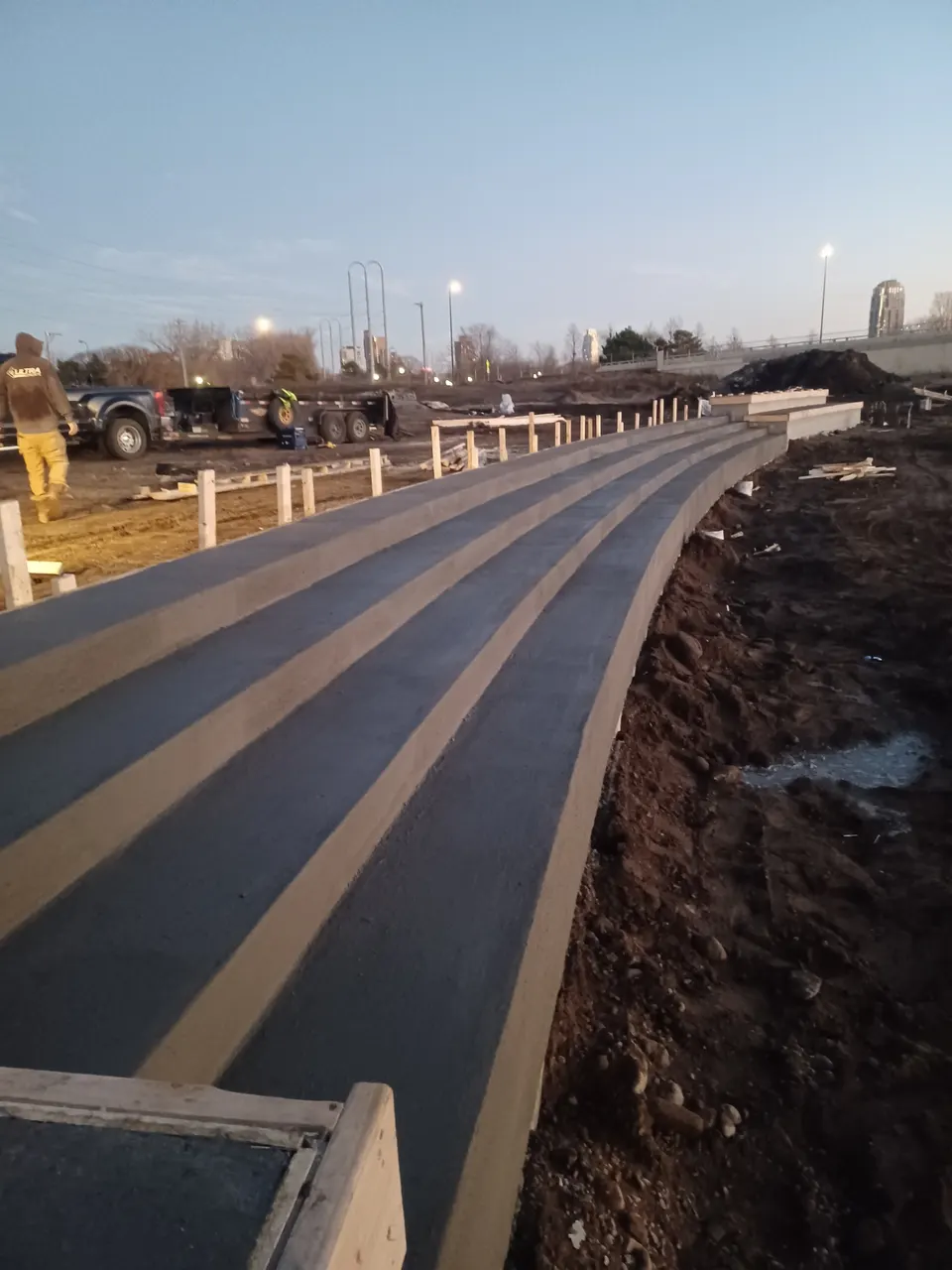
The photo on this post is a driveway we poured in early December. The day went like this. We checked the base at first light with a probe and confirmed it was not frozen. The plant batched with hot water and a non-chloride accelerator, and we timed the trucks so nothing sat in the drum. The crew placed and finished before the sun dropped, the blankets went on before dark, and they stayed on for most of a week while the nights ran cold. The owner kept cars off it for two weeks and did not put a truck on it until spring.
None of that is complicated. It is a handful of steps, done every time, and the difference between a driveway that looks the same in May and one that has to come back out.
When we say no
We turn down late-season work for a few reasons. The subgrade is frozen too deep to thaw. The forecast shows a hard freeze inside the protection window and no way to keep the slab warm. The job is a large slab with a long finishing time and the light and the temperature will not hold. Or the project is stamped or decorative work, which needs a longer, more controlled surface window than a cold day gives us.
In those cases we would rather book you for the first open week in spring than pour something we are not confident in. Spring around Cokato and Litchfield has its own problems, mostly wet ground, but frozen subgrade is not one of them.
Planning a late-fall pour
If your driveway or slab is on the schedule for November, a few things help. Have the site cleared and the grade set so we can pour on the first good day rather than the first available day. Expect the pour to be forecast-dependent and be ready to move a day or two either way. Plan for a longer cure before you drive on it. And know that the blankets will be on the slab for most of a week, which looks like nothing is happening. Quite a lot is.
Late fall is a fine time to pour concrete in Minnesota when it is done with the right mix, covered properly, and placed on ground that is not frozen. If you have a project you were hoping to finish before winter and want an honest read on whether it will fit, we are glad to look at the site and the forecast and tell you.
Want us to look at your job?
Free written estimate after we walk the site. We tell you which permit office it falls under before you fill anything out.
Questions we get asked
Can you pour concrete in November in Minnesota?
Yes, in most years. November pours work when the subgrade is not frozen, the mix is adjusted with hot water and an accelerator, and the slab is covered with insulated blankets for at least three days. We watch the ten-day forecast and pour on the front end of a mild stretch. Most years we pour driveways and slabs into early December around Cokato.
What temperature is too cold to pour concrete?
The industry treats it as cold weather once the average daily temperature drops below 40 degrees for more than three days. Concrete can still be placed below that with protection, but it must be kept above freezing until it reaches about 500 psi, and warmer is better. We stop when the ground freezes or when the forecast will not let us keep the slab warm.
How long do concrete blankets need to stay on?
At least three days for a normal slab, and longer when nights stay in the 20s or the mix has no accelerator. The blankets hold in the heat the concrete generates as it cures, which is what keeps it from freezing. We check under them and pull them once the slab has gained enough strength and the forecast allows it to finish curing exposed.
How long before you can drive on concrete poured in cold weather?
Longer than a summer pour. Concrete cures slowly when it is cold, so we ask for 10 to 14 days before cars on a late-fall driveway instead of the usual 7, and a full 28 days or more before anything heavy. Trucks, campers, and equipment stay off until spring on a December pour. Foot traffic is fine after a couple of days.
Can you pour concrete on frozen ground?
No. Frozen subgrade thaws and settles under the slab after the pour, and the slab cracks to follow it. Frozen ground also pulls heat from the bottom of the concrete and can freeze it before it gains strength. If the subgrade has frozen we either thaw it under insulated blankets or ground heaters, or we wait until spring.